Sunday, August 24, 2014
Rob McLennan | Convivial
Rob McLennan
Convivial
Armstrong, Canada: By The Skin of Me Teeth, 2009
18 pp., 16.5 x 11.5 cm., sewn-bound
Edition of 26 numbered copies
Hand-bound with greeting card covers with a Letraset title, and housed in a printed envelope, this book of eleven short poems is published by poet, artist, and performer kevin mcpherson eckhoff. By The Skin of Me Teeth is his "minuscule press dedicated to publishing the absolute dullest writing by both emerging & established authors", which produces chapbooks and artists' books in very limited editions. eckhoff is in town for a performance at Videofag last Thursday.
Author rob mclennan, born and currently residing in Ottawa, has written nearly thirty books of poetry, fiction and non-fiction. He won the John Newlove Poetry Award in 2010, the Council for the Arts in Ottawa Mid-Career Award in 2014, and was longlisted for the CBC Poetry Prize in 2012.
His forthcoming poetry collection If suppose we are a fragment (BuschekBooks) launches Thursday the 25th September at Pressed Café (750 Gladstone Avenue, Ottawa) at 7:30 PM.
Saturday, August 23, 2014
Emmett Williams | Chicken Feet, Duck Limbs and Dada Handshakes
Emmett Williams
Chicken Feet, Duck Limbs and Dada Handshakes
Vancouver, Canada: Western Front, 1984
64 pp., 7-1/8" x 5-1/2", softcover
Edition of 500
Produced during a residency at the Western Front in September 1984, this book tells the story of Fluxus artist Williams meeting various members of the Dada movement. He recounts shaking hands with Tristan Tzara, Max Ernst, Hans Arp, Man Ray, Richard Hulsenbeck and Marcel Duchamp. He never met, shook hands or laid eyes on Picabia, but notes that he shook hands with many of his mourners, on the afternoon of his funeral.
The text is handwritten by Williams and the book is illustrated with his doodles (similar to the cover) and with prints made by using chicken and duck feet as rubber stamps. The artist is photographed with a hammer in hand and a duck's foot in the other, in his 1992 autobiography My Life in Flux and Vice Versa.
"So much happened during month-long residency at the Western Front cultural centre that I recall it as a simultaneity, with no sense of chronology...Kate Craig, curator of the Front's video productions suggested that we work up a video project, but I was so busy seeking out gourmet Chinese restaurants in Chinatown, and making my book".
- My Life in Flux and Vice Versa
The only copy on ABE is listed at $195 (here), but still available from the publisher for $30.00, here.
Friday, August 22, 2014
Rainier Lericolais | Quatuor à cordes n°3
Rainier Lericolais
Quatuor à cordes n°3
Paris, France: Self-published, 2014
18 x 13 cm, audio postcard
Edition of 250 signed and numbered copies
Paris-based artist Rainier Lericolais published this two-minute-and-fifty-four-second audiowork on the occasion of his exhibition Fossils at galerie Frank Elbaz, which ran from April 26th to May 31st of this year.
The show examined tropes and technologies of the avant-garde past, celebrating obsolete technologies. The vinyl postcard represents two such fading everyday items. Despite the sales of vinyl records tripling in the past five years, the total still amounts to less than three percent of total music sales, making the term 'resurgence' a bit of an overstatement. Email, texting and twitter have all obviously replaced the short messages that postcards conveyed - apparently sales have dropped to below 1932 levels, which was not only during the Great Depression, but when the population was less than a third what it is now.
This lo-fi format, typically used for goofy promotional items, with its inevitable additional background noise, contains the work String Quartet #3, which is entirely built from string quartet sound samples.
Visit the artist's gallery page, here.
Thursday, August 21, 2014
Ger van Elk | Bulletin 33
Ger van Elk
Bulletin 33
Amsterdam, The Netherlands: Art & Project, 1971
4 pp., 11.7 x 8.3", folded
Edition of 800
The 33rd (of an eventual 156) Art & Project Bulletin announces the Ger van Elk work Paul Klee - Um Den Fisch, 1926 (Around The Fish) from 1970, which consists of eight colour slides projected onto a wooden table with a white cloth. The slides document the artist consuming a meal based on a Klee painting. Van Elk reconstructed Klee’s work with tangible objects, replacing abstract designs with tangible items.
In addition to producing more Art & Project bulletins than any other artist (numbers 19, 33, 55, 65, 74, 100, 132, and 139), Ger Van Elk was also played a crucial role in introducing the Amsterdam gallery and publisher to numerous Los Angeles artists, including Bas Jan Ader (issues 44, 89), William Leavitt (58 and 80) and Allen Ruppersberg (67 and 105).
Van Elk moved from Amsterdam to Los Angeles in 1961, with his father, Peter Van Elk, an animator for Hanna Barbera, who worked on several episodes of the Flintstones. Here he befriend artists such as William Wegman, John Baldessari, and Robert Indiana. He was previously close with Bas Jan Ader, and when Ader also relocated to LA the two shared an apartment together on Sunset Boulevard.
"We wanted to be movie stars," Van Elk told Christophe Cherix in 2008. Their cohabitation was cut short when a neighbour set their house on fire and Ader moved in with his future wife, Mary Sue.
Van Elk had several solo exhibitions at the Art & Project gallery from 1970 to 1987, and (together with Marinus Boezem, Wim T. Schippers and Jan Dibbets) is seen as one of the main representatives of the conceptual art and arte povera movements in the Netherlands. His work was included in Documenta 5, in 1972, and in the influential exhibition “When Attitudes Become Form” in 1969.
Ger van Elk died on Sunday (August 17th) at the age of 73.
Bulletin 33 is available for $99 from FTN Books, here.
Wednesday, August 20, 2014
David Harper | Entre Le Chien Et Le Loup
[David Harper]
Entre Le Chien Et Le Loup
Toronto, Canada: Doris McCarthy Art Gallery, 2014
120 pp., 22.6 x 14.7 x 2 cm., hardcover
Edition size unknown
A handsomely designed catalogue to accompany the travelling exhibition of the same name, which began at the Doris McCarthy Gallery in February of 2013 and wraps up at Saint Mary's University Art Gallery later this month. It was also hosted by the Kitchener-Waterloo Art Gallery, the Kenderline Art Gallery (Saskatchewan) and the Ottawa Art Gallery. All venues are co-publishers of the book.
The title phrase “entre chien et loup” translates literally into "between dog and wolf" but is used to describe a time of day, just before night, when the light is so dim one cannot distinguish the two animals. It also expresses that limit between the familiar, the comfortable versus the unknown and the dangerous, the domestic and the wild. It is an uncertain threshold between hope and fear.
Harper's first monograph is a white clothbound book (with a discreet foil stamped cover) held in a die-cut cardboard slipcase, designed by Lauren Wickware. It features an introduction from Doris McCarthy Director/Curator Ann MacDonald and the essays "The Magic of The Handmade Thing" by Lise Stone & Jim Zanzi, "My Life as a Placeholder" by Jan Peacock, "All at Once" by Crystal Mowry and "Whether Pigs Have Wings" by Robin Metcalfe.
The final stop on the tour opens this Saturday (August 23rd) and runs until the 5th of October at the Saint Mary's University Art Gallery in Halifax. Visit the gallery site, here.
The catalogue will be part of a joint-launch with the pace of days, which documents Monica Tap's recent exhibition at the Macdonald Stewart Art Centre. The event takes place on September 2nd, from 7 to 9 pm at MKG127.
Tuesday, August 19, 2014
David Shrigley | No Junk Mail
David Shrigley
No Junk Mail
Toronto, Canada: Paul + Wendy Projects, 2014
13 x 13 cm.
Edition of 100 (+12 APs) signed and numbered copies
An overly earnest sign commanding No Junk Mail always seems worse than actual junk mail, so this David Shrigley work is the perfect functional multiple.
The porcelain enamel on steel sign is the most recent (23rd) edition from Paul + Wendy projects, who have also published prints, books and multiples by The Royal Art Lodge, Kay Rosen, Jonathan Monk, Micah Lexier, Maggie Groat, Daniel Eatock, Derek Sullivan and many others. The sign is housed in a cardboard box and is accompanied by a letterpress card with the artists signature. It's available from the publishers, here, for $250 CDN., while supplies last.
Monday, August 18, 2014
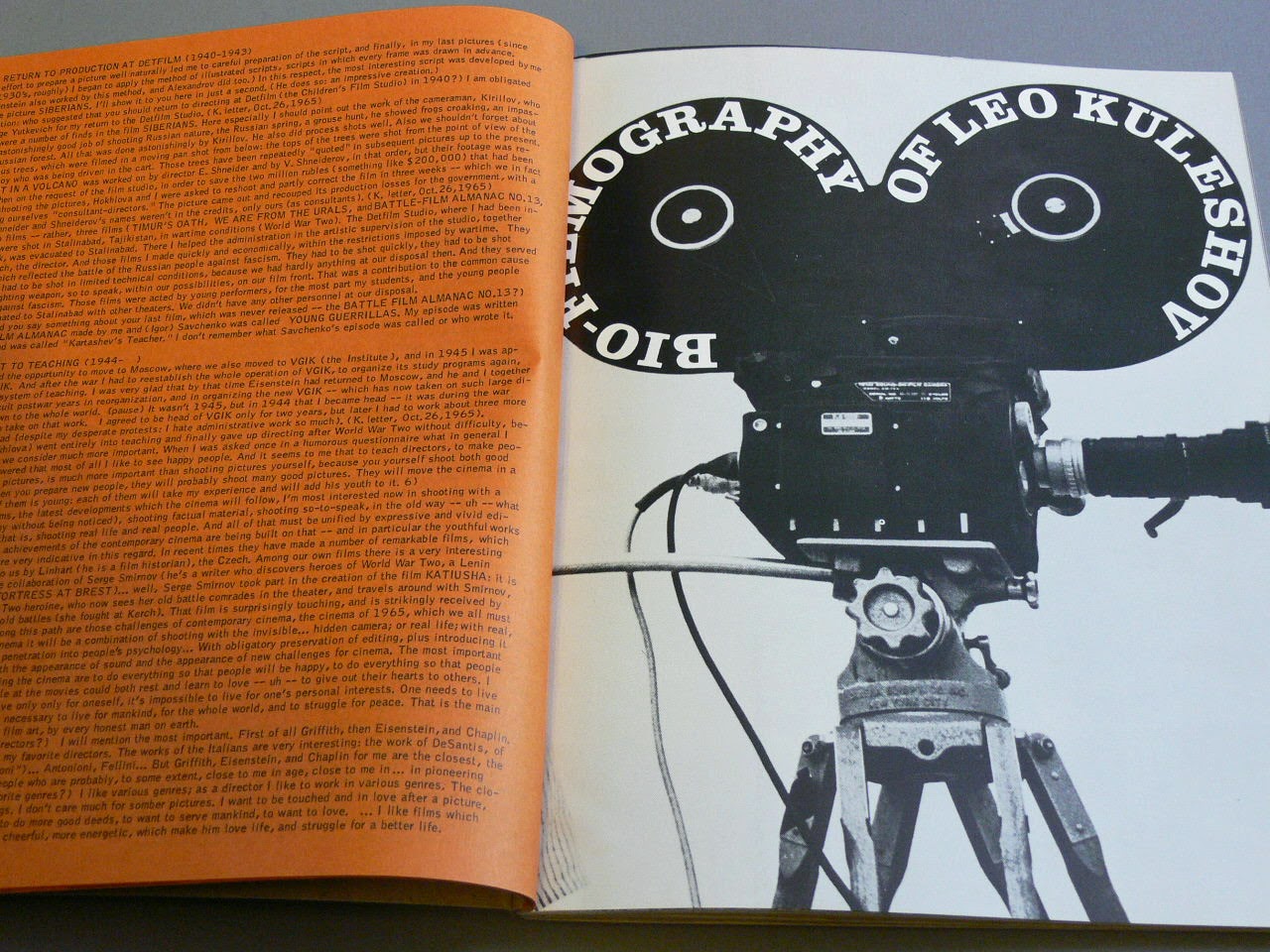
Film Culture 44, Spring 1967
Jonas Mekas (ed), George Maciunas (designer)
Film Culture 44, Spring 1967
New York City, USA: Film Culture, 1967
78 pp., 26.5 x 21 cm., softcover
Edition size unknown
Founded in 1955 by Jonas Mekas and his brother Adolfas, the New York-based magazine Film Culture is regarded as the seminal avant-garde cinema magazine. It began by covering Hollywood films and evolved into the primary voice of independent and avant-garde cinema, continuing on until 1996.
Film Culture took up offices in the 80 Wooster Street building that friend and fellow Lithuanian George Maciunas converted into the "creative co-op" that first brought artists into SoHo, changing the area forever, and earning him the epithet “Father of SoHo”. Maciunas was was the designer for nine of the seventy-nine issues of the journal. He responsible for the typography and layout of issues 14 - 18, 30, and 43 - 45. (Maciunas' design for Mekas' book Reminiscences can be seen here).
Maciunas bound issue #30 in corrugated cardboard and issue #43 was a newspaper dedicated to Fluxus, but #44 remains the most accessible (read: still available for under $150), while still showing the hallmarks of Maciunas' design. These include an envelope containing facsimile reproductions of hand-written notes to Mekas, his stylized interplay between image and typography and his own contribution “USA Surpasses All Genocide Records”.
"Maciunas was a highly skilled typographer and graphic designer. He did commercial work to seek out a living, but used non-commercial venues to experiment with new ways of representing ideas in graphic form. His multi-disciplinary studies in architecture, art and graphic design at Cooper Union, in architecture and musicology at the Carnegie Institute of Technology, and in art history at NYU’s Institute of Fine Arts, exposed him to an array of visual information—from musical scores to architectural blueprints—giving him the tools to develop his unique graphic style. We see this early on in his ambitious information charts, begun in the late 1950s, which trace developments in the histories of art and world events, covering antiquity to the present.
Well-versed in the history of the avant-garde from Dada to Lettrism, Macuinas continued these groups’ interests in the visuality of text, often as a means to explore the conceptually challenging spaces in which semiotics break down. Fluxus, in particular, but also journals such as Film Culture, were where his most inventive designs came to light."
- Tomas Schmit
Subscribe to:
Posts (Atom)