Showing posts with label GAAG. Show all posts

Monday, November 8, 2021

Jean Toche | I Piss on the Arts


Jean Toche
I Piss on the Arts
Cologne, Germany: Edition Hundertmark, 2001
16 pp., 15 x 21 cm., staple-bound
Edition size unknown


Jean Toche was a Belgium-born artist who relocated to New York City in the mid-sixities, where he lived until his death in 2018. He was arrested several times for his artworks and activism, including once by the FBI, for sending letters threatening kidnapping to the Metropolitan Museum of Art. 

I ended up on his mailing list for a couple of years (possibly through our shared friend Jon Hendricks, who Toche founded the Guerrilla Art Action Group with - see earlier post, here). 

This meant getting at least one postcard in the mail every single day. I have boxes of them. It also meant receiving a series of self-published publications in the mail almost weekly (see Stephen Perkins’ Artists Periodicals site for examples).

I remember being curious as to how he could possibly afford the postage and printing costs. He would have been in his late seventies at the time, possibly early eighties. I sometimes wondered if Yoko Ono offered her support to his practice (Hendricks is her longtime curator and she has been known to funnel cash to some radical politics in the past).

One of the items I received - more than once, I recall - is I Piss On the Arts. The thin, grey artist book is the penultimate title in the Edition Hundertmark booklet series. Toche also produced the 45th and final issue, Waiter There's A Terrorist In My Soup, a year later. 

The cover features a petition it asks the reader to sign and distribute, declaring that you, too, “Piss on the Arts”. Inside are examples of the types of postcards Toche was distributing at the time. Statements like: 

"It is mean and despicable to support the death penalty. The majority of Americans supports the Death Penalty."

and 

"Increasingly, Global Business replaces Democracy. Burn that Proxy and Speak out!". 

or calling for war tribunals to “issue an arrest warrant for former President George Bush, former Prime Minister Margaret Thatcher, former President Bill Clinton, Prime Minister Tony Blair”, etc. etc. 

It all seems reasonable enough, sometimes quaint even, and anticipates the current reckoning happening in the art world in regards to its seemingly indifferent stance in the face of political upheaval (which of course just calls back a few decades ago to groups like the Art Workers Coalition, for example). 

But when these were arriving daily in the mail, I do recall worrying if I was featured on some governmental lists of potential agitators (previous to this I was cc'd on death threats a distant acquaintance would send to arms manufacturers, so it didn't feel like an overly paranoid fear). 


I piss on the arts is available from the publisher, here, for 16 Euro.


Monday, July 9, 2018

Jean Toche, RIP


Jean Toche, artist, activist and co-founder of the Guerrilla Art Action Group, was found dead in his home by the police, this afternoon.

Wednesday, May 2, 2018

Guerrilla Art Action Group | Action-Interview at WBAI Radio Station-N.Y.


Guerrilla Art Action Group
Action-Interview at WBAI Radio Station-N.Y.
New York City, USA: Primary Information, 2018
12” Vinyl LP, 43:12 minutes
Edition of 500

Originally broadcast on WBAI Radio in New York City in 1970, and released on vinyl by Edizioni Lotta Poetica thirteen years later, this spoken word Action-Interview is the latest release by Primary Information, who have been re-printing important artists’ publications for the last twelve years.*

WBAI is a non-commercial, listener-supported radio station with an emphasis on progressive politics. Broadcasting at 99.5 FM in New York City (from a transmitter atop the Empire State Building) the station first went on the air in 1941, and by the 1970’s was an influential force in leftist politics and culture on the airwaves.

The station’s adventurous programming included a round-the-clock live reading of Tolstoy’s epic novel War And Peace, which took over four days and two-hundred readers to complete; and an uncensored broadcast of George Carlin's iconic Seven Dirty Words routine, at two in the afternoon, no less. The latter led to a Supreme Court ruling which to this day dictates the government’s right to regulate the airwaves against indecency.

The station has presented the work of many contemporary artists, particularly those whose work crosses over into poetry, performance, music, dance and theatre, including Vito Acconci, John Cage, John Giorno, Philip Glass, Joan Jonas, Meredith Monk, Yvonne Rainer, Willoughby Sharp, Robert Wilson, and numerous others.

The Guerrilla Art Action Group was formed in October 1969 by artists Jon Hendricks and Jean Toche. Hendricks - now the curator of Yoko Ono Exhibitions and one of the leading authorities on Fluxus - had then been serving as the director of the Judson Gallery at the Judson Memorial Church in New York City, initially as a requirement for his Conscientious Objector status, to avoid conscription to fight in the Vietnam War.

During this time he curated numerous now-legendary Destruction Art events at the liberal church, including a garden performance where Hermann Nitsch gutted a lamb, Lil Picard burned feathers and images of war, and Charlotte Moorman - performing Nam June Paik’s One for Violin - smashed the instrument over the head of a spectator protesting that the violin should be given to a music student instead of being destroyed.

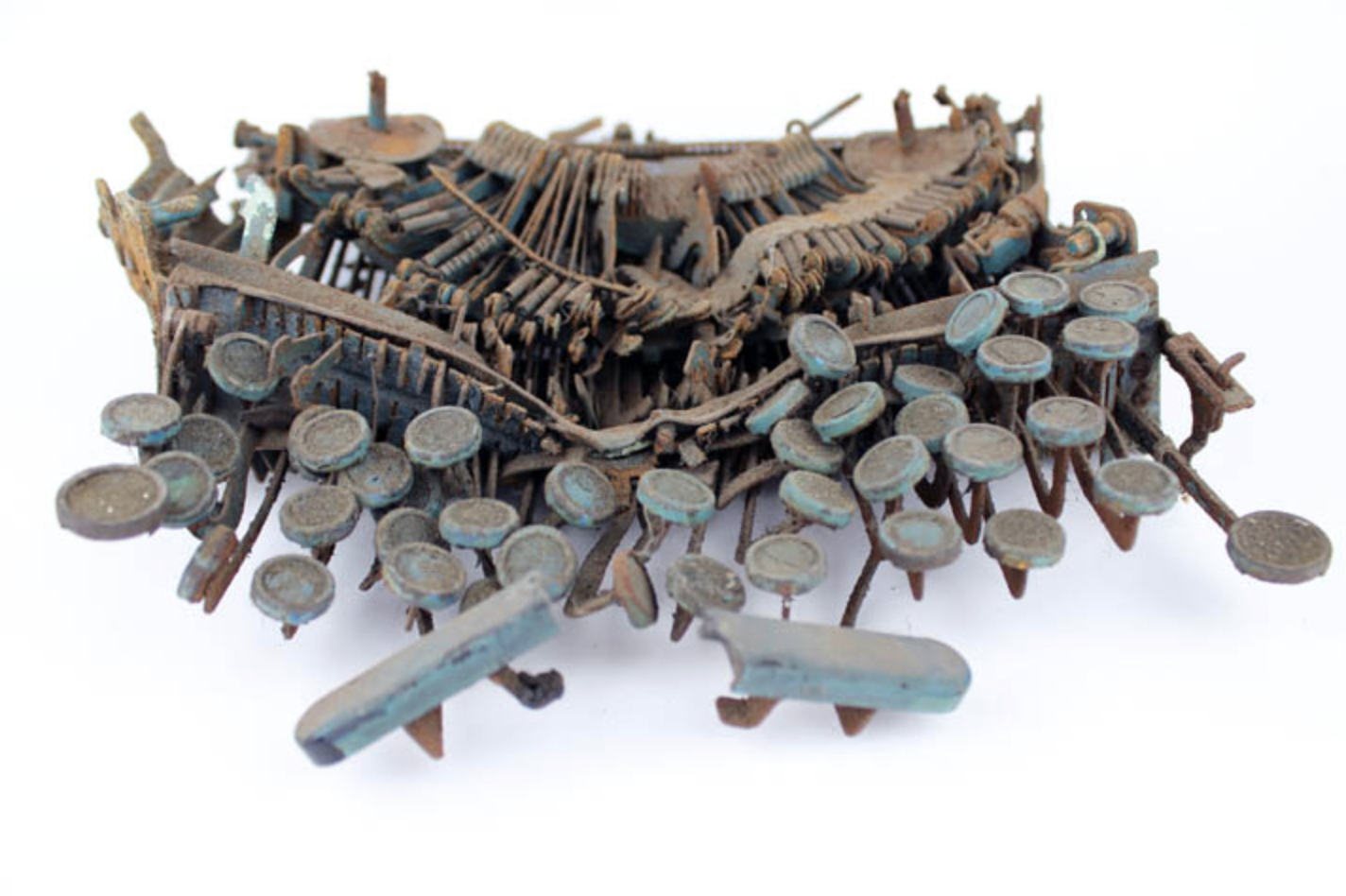
When Hendricks co-curated the Destruction in Art Symposium USA 68, he invited Jean Toche to participate. Toche had attended the original DIAS in London, two years prior (destroying typewriters with a hammer, alongside Al Hansen). Born in Bruges, Belgium in 1932, Toche relocated to the USA in his early thirties, where he became active in the radical political art scene, staging happenings and publishing manifestos. The FBI described him as a "professional troublemaker, foreign agitator, peacenik, dirty commie, flag burner, big tall burly bearded hairy man".

Toche now lives in Staten Island and remains active with political art mailings and publications such as I Piss On The Arts and Waiter! There’s a Terrorist in My Soup. For a couple of years I was on his mailing list and received almost daily denouncements of George Bush and the Iraq War, in the form of hand-made postcards.

Hendricks and Toche were part of the Art Workers’ Coalition, a loose association of artists, writers, and cultural workers founded in 1969 around shared commitments to social action and the reform of art institutions. Other members included Carl Andre, Robert Barry, Gloria Greenberg Bressler, Selma Brody, Mark Di Suvero, Hollis Frampton, Dan Graham, Hans Haacke, Joseph Kosuth, Naomi Levine, Sol LeWitt, Lucy Lippard, Lee Lozano, Barnett Newman, Lil Picard, Faith Ringgold, Seth Siegelaub, and Michael Snow.

Not unexpectedly, the large group (there were reportedly over 300 members at one point) became increasingly fractured. Hans Haacke noted "What one wants, the other objects to strenuously; e.g. one wants to destroy museums, the other wants to reform them or to use the museums as they are for his own artistic ends, and the third simply wants a piece of the pie."

Hendricks and Toche formed the Guerrilla Art Action Group, one of many AWC splinter groups, which also included WASABAL (Women Art Students and Artists for Black Artists’ Liberation), the Black & Puerto Rican Emergency Cultural Coalition, the Art Strike, the Emergency Cultural Government, and WAR (Women Artists in Revolution). The GAAG began with the intention of staging actions that could reach a wider public than the insular audience for political performance art. ''If I could have stopped the war with a painting, I would have done that; but I'm not a good painter,'' Hendricks told the New York times in 1997.

Whereas the Artists Workers Coalition were primarily interested in artists' rights, the Guerrilla Art Action Group were interested in artists' responsibilities. And the responsibilities of art institutions.

The radio broadcast was made just a few months into the activities of the GAAG, but already the group had spilled blood in the lobby of the MoMA to demand the Rockefellers resign from the board of the museum, due to their involvement in weapons manufacturing for the Vietnam War. They had also demanded that the MoMA sell a million dollars worth of art from their collection and distribute the funds to the poor, and close their doors for the remainder of the war in Vietnam. They asked the director, John Hightower, to host a press conference and announce "I am guilty, I am guilty, I am guilty" while they poured beef blood over his head. Unsurprisingly, none of these things happened.

Billed as an Action-Interview, the audio on the LP consists entirely of members of the GAAG (Toche and Hendricks are joined by member Poppy Johnson, and Laurin Raiken, from the Art Workers Coalition and the New York Free Theatre) making statements and posing questions. The topics - virtually all of which still resonate with conversations still taking place today - include the problematic relationship between art and business, art and the military, art and class, art and community, and art and race.

Some of these statements are broad enough to be considered directed at the general public ("As long as we have business values, we will have racism and poverty") whereas others are clearly designed to have artists rethink their own complicity in the moral failings of institutions ("What is more important to you? To exhibit in a museum, or to fight for the human rights of the oppressed?", "Is it more important to you to sell your painting, or help human beings?").

"Today artists are egomaniacs" reminds one of Hendricks' connection to French artist Ben Vautier, who made the artists' ego a subject of long-term investigation. "Culture should deal with process, not objects" reaffirms his connection to the conceptual art he was exhibiting at the Judson, and to his longstanding professional relationship with Yoko Ono, one of the progenitors of conceptual art.

A few of the other queries, at random:

"How long will you accept being the repressed lackey of society’s manipulations?"
"Are you guilty of being a repressor?"
"Do you think an artist is more important than another human being?"
"Are you on some kind of ego trip?"
"Are you a prostitute?"
"Are you one of those pimps who makes his wife work so that he can paint all day long?"
"Should western culture have a monopoly on culture?"
"Shouldn’t people have control over their own culture, whatever race they belong to?"
"Do you work for a racist institution?"
"Do you think that art should serve the function of cleansing the image of murderers?"
"Are you guilty of supporting racist and repressive cultural institutions?"
"How long will you accept being the oppressed lackey of society’s manipulators?"
"Are not most artists concerned with being part of the cultural mafia at any cost?"
"Are you ready to fight against the subversion of culture by business?"
"Have you decided that the present cultural and cultural institutions are oppressive?"
"Do you enjoy being the creative toy of an elite?"
"Are you guilty of being such a toy?"
"If you are involved, shouldn’t you renounce it?"
"And babies?"

That last question was the title of a poster that Hendricks produced as part of the Artist's Poster Committee of Art Workers Coalition. One of the most enduring protest images from the era, the poster featured the now infamous My Lai Massacre picture taken by combat photographer Ronald L. Haeberle on March 16, 1968, overlaid with a distressed font which quotes four harrowing words from a Mike Wallace CBS News interview with a US Soldier named Paul Meadlo, who participated in the massacre:

Q. So you fired something like sixty-seven shots?
A. Right.
Q. And you killed how many? At that time?
A. Well, I fired them automatic, so you can’t- You just spray the area on them and so you can’t know how many you killed ‘cause they were going fast. So I might have killed ten or fifteen of them.
Q. Men, women, and children?
A. Men, women, and children.
Q. And babies?
A. And babies.

The MoMA had initially agreed to fund and circulate the poster, but was vetoed by the president of the Board of Trustees, William S. Paley, who reportedly "hit the ceiling" when he saw the poster proofs. Paley was the chief executive office of the CBS radio and television networks at the time and he and fellow board member Nelson Rockefeller were both "firm supporters" of the war and had backed the Nixon administration. MoMA withdrew their funding and issued a press release which stated that the project was outside the "function" of the museum, which could not take a position on any matter not directly related to a specific function of the institution.

This was the institutional environment that the GAAG were working in, silent on the subject of war, race, class and gender, while taking money from corporations that profited from the status quo of these very issues.

The recording was originally released by Edizioni Lotta Poetica and Studio Morra as part of their Radio Taxi series, which also featured audio works by Henri Chopin, Jackson Mac Low, Philip Corner, Bernard Heidsieck, Hermann Nitsch, and others. Primary Information present the gatefold sleeve in near facsimile to the original, with the complete text of the performance and a cover photograph by Hendricks' wife Joanne.

The work is an effective example of agit-radio, with the phrasing of the questions sometimes feeling like an interrogation. The last ten minutes or so consists entirely of a man (Hendricks?) shouting out the word "help" over and over again. Listening the other night, I felt compelled to turn the volume down to avoid alarming my neighbours,

Hearing it broadcast live in 1970 would have been considerably more discomforting.

The disk is currently on sale for only $16 US at Primary Information, here.


*Other Primary Information audio re-issues include How to Make a Happening by Allan Kaprow, the UJ3RK5 Live From The Commodore Ballroom, and Canciones de Cadaques by Dieter Roth and Richard Hamilton.


Thursday, February 5, 2015

Joanne Stamerra | Erase Sexism at MoMA


Joanne Stamerra
Erase Sexism at MoM
Self-published: New York City, 1976
2 x 5.7 x 1 cm
Edition size unknown

Joanne Stamerra, a sometime member of the Guerrilla Art Action Group (or GAAG - alongside Jon Hendricks, Jean Toche, Poppy Johnson and Virginia Toche), produced this work in response to two major bicentennial exhibitions: Drawing Now at MoMA and Twentieth-century American Drawing at the Solomon R. Guggenheim Museum. Stamerra felt the shows not only excluded women but had a "generational bias and a bias towards big commercial galleries".

The erasers were surreptiously placed throughout the Museum’s galleries, alongside other protests.


Tuesday, August 12, 2014

Q. And babies? A. And babies.


Artist's Poster Committee of Art Workers Coalition
Q. And babies? A. And babies. 
New York City, USA: Self-published, 1970
63.5 x 96.5 cm.
Edition size unknown

One of the most enduring images from the Art Workers' Coalition (see previous post) is their iconic anti-Vietnam War poster And Babies. It features the now infamous My Lai Massacre picture taken by combat photographer Ronald L. Haeberle on March 16, 1968, and first published in Life magazine in December of 1969.

The text, in an enlarged, distressed font, comes from a Mike Wallace CBS News interview with a US Soldier named Paul Meadlo, who participated in the massacre:

Q. So you fired something like sixty-seven shots?
A. Right.
Q. And you killed how many? At that time?
A. Well, I fired them automatic, so you can’t- You just spray the area on them and so you can’t know how many you killed ‘cause they were going fast. So I might have killed ten or fifteen of them.
Q. Men, women, and children?
A. Men, women, and children.
Q. And babies?
A. And babies.

It has been estimated that over 500 unarmed civilians were killed - some raped, tortured and mutilated before their deaths - as part of the March massacre in South Viet Nam. The massacre caused global outrage when it became public knowledge in November of 1969. Eventually twenty-six US soldiers were charged with criminal offenses, but only one was convicted. Despite being found guilty of killing 22 villagers, he served only three and a half years under house arrest.

The poster was produced by AWC and GAAG members Frazer Dougherty, Jon Hendricks and Irving Petlin, along with Museum of Modern Art members Arthur Drexler and Elizabeth Shaw. Unexpectedly, the MoMA had agreed to fund and circulate the poster, but it was eventually vetoed by the president of the Board of Trustees, William S. Paley (chief executive office of the CBS radio and television networks). He and fellow board member Nelson Rockefeller were both "firm supporters" of the war and had backed the Nixon administration.* Paley reportedly "hit the ceiling" when he saw the poster proofs. Funding was cancelled and the MoMA's press release stated that the project was outside the "function" of the museum, which could not take a position on any matter not directly related to a specific function of the institution.

"We picketed and protested in front of Guernica, published 50,000 posters on our own and distributed them, free, via an informal network of artists and movement people; it has turned up all over the world," wrote AWC member Lucy Lippard in November of 1970. The poster image was broadcast on television and reprinted in newspapers, as well as carried in protest marches around the globe.

The AWC press release stated "Practically, the outcome is as planned: an artist-sponsored poster protesting the My-Lai massacre will receive vast distribution. But the Museum's unprecedented decision to make known, as an institution, its commitment to humanity, has been denied it."

Shortly afterwards, the poster was included in two major MoMA exhibitions: Kynaston McShine's 1970 exhibition of conceptual art, Information; and Betsy Jones' The Artist as Adversary in 1971.
The work is included in the gallery's permanent collection.

* In the years that followed Paley would shorten a second instalment of a two-part CBS Evening News series on the Watergate, based on a request by Charles Colson, an aide to President Richard M. Nixon, and order the suspension of a critical analyses by CBS news commentators following Presidential addresses.

Monday, August 11, 2014

Art Workers Coalition | Open Hearing


Art Workers Coalition
Open Hearing
New York City, USA: Self-published, 1969
142 pp., 8.5 x 11", thick side-stapled wrappers
Edition size unknown


On the afternoon of January 3rd, 1969, the Greek sculptor Takis Vassilakis, accompanied by Willoughby Sharp and a few other accomplices, visited the Museum of Modern Art in New York to unplug and de-install the artist’s own work, Tele-Sculpture. The piece, owned by the Museum, was included in the exhibition without consultation by the artist, who felt that it no longer represented his practice. They placed a call to alert the museum's director, and staged a sit-in protest in the Museum's garden. Hundreds of handbills were distributed to gallery goers, with a list of four complaints:

1. The exhibition of living artists without their consent.
2. The degree of control exercised by museums, galleries and private collector over the works of living artists.
3. The lack of consultation between museum authorities and artists, particularly with regard to the maintenance and installation of work.
4. The unauthorized use of photographs and other material for publicity purposes.*

Director Bates Lowery came down to meet with the group, and agreed to the permanent removal of the piece from the exhibition. He also told them that he would "seriously consider" the group's demands that the Museum host a public hearing to discuss their concerns over "the current relationship between artist and museum".

This event marked the birth of a group that would later be known as the Art Workers Coalition, or AWC, and would come to include over 300 artists, critics, writers, and arts administrators who sought the reform of large cultural institutions and fought for the rights of artists.

In the fliers that Takis distributed, he called the protest “the first in a series of acts against the stagnant policies of art museums all over the world.” He continued: “Let us unite, artists with scientists, students with workers, to change these anachronistic situations into information centres for all artistic activities,” thus tying his personal discontent to a larger disenfranchisement artists felt in relation to museums and institutions. By the end of the month the original six were joined by art critic Gregory Battock, and several artists from the Howard Wise gallery, including Hans Haacke and Wen-Ying Tsar.

The new expanded group submitted a list of thirteen demands to Lowery, which included calling for free admission to museums, opening hours that can accommodate working people, and better representation regarding race and gender. Lowery responded a couple of weeks later that he was recommending to the Board of Trustees that a Special Committee on Artist Relations be appointed.

On February 22, the group, now joined by Carl Andre, Joseph Kosuth and Lucy Lippard, held the first of many meetings at the Chelsea Hotel, to determine their next move. Further letters were exchanged with Lowery, but his responses were deemed unsatisfactory so the group staged increasingly large protests outside of the MoMA (including the distribution of counterfeit admission tickets designed by Joseph Kosuth),

The Open Public Hearing on the Subject: What Should Be The Program of The Art Worker’s Regarding Museum Reform, What Should be Done to Establish the Program of an Open Art Workers’ Coalition was announced for April 10th, with a flyer that read:

“East [sic] person who wishes to speak will be assigned, upon arrival, an approximate time for speaking. Any witness who does not wish to wait or return for his turn, may give the secretary a brief statement to be read at the appropriate time.”

The event attracted an attendance of almost 400, and over 80 art workers read statements. Richard Artschwager used his two minutes at the podium to light small firecrackers.

The 1969 publication Open Hearing features a collection of mimeographed copies of artists’ statements from the event, as well as letters and other documents pertaining to the AWC. The index lists the following categories:

Structure of the Art Workers’ Coalition
Alternatives to Museums and Art Institutions
Reforms of Art Institutions
Legal and Economic Relationships to Galleries and Museums
Specific Proposals of Action
Artists’ Relationships to Society and other Philosophical Considerations
Black and Puerto Rican Artists’ rights

with most writings falling under multiple categories.

Carl Andre contributes a text entitled A Reasonable and Practical Proposal for Artists who Wish to Remain Free Men in these Terrible Times, Jean Toche calls for artists’ participation in the running of all museums and Hans Haacke suggests the MoMA has become “an art-historical mausoleum”. Kosuth quotes Oscar Wilde.

Seth Siegelaub notes that the only seemingly unique aspect of an artist is that he makes art and no one else does, and “this is where your leverage lies”.

Hollis Frampton, Ken Jacobs and Michael Snow co-sign a letter demanding full autonomy for the MoMA’s film department, and reasonable purchase and screening fees, as well as supporting other ideas popular within the group (free admission to the museum, for example).

Critic Alex Gross (who had previously written about the initial Takis Vassilakis protest for the
The East Village Other) discusses a common situation in which secondary market works sell for exorbitant prices while the artist continues to live penniless, and suggests that an artist retains a “propriety interest in his work even after he has sold it”. He proposes a royalty of between 10 and 33 percentage. Sol Lewitt argues that a living artist should retain rights over their works and that collectors would “in a sense, be custodians of that art”.

Faith Ringold contributes a questionnaire on the topic of the museum experience for black and Puerto Rican visitors. The six questions can be answered YES, NO or UNCERTAIN. The document also calls for a Martin Luther King Jr. wing of the MoMA, as do several of the other contributions.

Lucy Lippard, while striking a somewhat more conciliatory tone, suggests that “the conventional museum is by nature too big, too bulky, too slow to keep track of and keep up with the studios in a time of such rapid change”. Robert Barry notes that the very first word in the name MoMA is a lie, and suggests it could be abandoned altogether: “Why not work outside it and leave it to those who want it?”.

Lee Lozana’s handwritten contribution reads: “for me there can be no art revolution that is separate from a science revolution, a political revolution, an education revolution, a drug revolution, a sex revolution, or a personal revolution. i cannot consider a program of museum reforms without equal attention to gallery reforms and art magazine reforms which would aim to eliminate stables of artists and writers. i will not call myself an art worker but rather an art dreamer and i will participate only in a total revolution simultaneously personal and public.”

These varying approaches ultimately led to the end of the AWD, in late 1971. Hans Haacke: “What one wants, the other objects to strenuously; e.g. one wants to destroy museums, the other wants to reform them or to use the museums as they are for his own artistic ends, and the third simply wants a piece of the pie.” Lucy Lippard wrote: “By the end of 1971, the AWC had died quietly of exhaustion, backlash, internal divisions . . . and neglect by the women, who had turned to our own interests.”

While the activities of the AWC lasted less than three years, many splinter groups continued: GAAG (the Guerilla Art Action Group, which consisted of Jean Toche, Jon Hendricks and Poppy Johnson), PRAWC (the Puerto Rican Art Workers’ Coalition), Women Artists in Revolution, The Emergency Cultural Government, Artists Meeting For Cultural Change, The Ad Hoc Women’s Artist Committee and the Art Strike.

The latter had organized the October 15th 1969 protest, Moratorium of Art to End the War in Vietnam, convincing the MoMA, the Whitney Museum, the Jewish Museum and a large number of commercial art galleries to close for the day. The Metropolitan Museum and the Guggenheim did not comply, but the MET did postpone an exhibition opening scheduled for that day, and the Guggenheim was picketed.

The coalition's activities eventually led to changes in how museums interact with artists, a contribution to the art world that is considered lasting in spite of the coalition's short three-year existence. The appointment of artists as trustees on Museum board of directors is increasingly commonplace.

The group can count many other successes, both directly and indirectly, immediate and long-lasting:

MoMA officially affiliated with the Museum Division of the Distributive Workers of America union, in May 1971. Their two-week strike in August of that year resulted in a wage increase, job security, and a greater voice for staff in policy decisions.

The New York State Council on the Arts created the “Ghetto Arts Program” aimed at black and Puerto Rican artists. Some of the language and approaches used are cringe-worthy now, but can be viewed as initial steps towards building community-based arts programming.

A direct result of the Art Workers’ agitations, MoMA began a free admission day in February of 1970. On the first of these the museum tripled its attendance, and the New York Times reported that the crowd “was younger and less white than usual, and included many family groups.” Many New York City museums now offer free admission on select days (for a list, click here) and there are over 50 museums in the UK with a completely free admission policy (click here).

In Toronto, The AGO has free entry (to the permanent collection) on Wednesday nights from 6 - 8:30 pm. A few years ago the Power Plant accepted sponsorship to ensure free admission during the summer, and recently this has been expanded to a year-round policy, courtesy of BMO Financial Group.

Other than token evenings, gallery hours still seem aimed at vacationing tourists and those with non-9 to 5 employment. How contemporary art hopes to compete with other culture (cinema, television, music, sporting events, drinking, etc.) and close at 6pm continues to baffle.

In 1976, California enacted the Resale Royalty Act, which (under certain conditions) ensured that artists were paid 5% of resale prices for the duration of their lifetime, and 20 years afterwards (when the proceeds would go to their heirs). The law was struck down as unconstitutional in 2012 and is currently pending appeal.

Almost 60 countries now, including most of Europe, have laws that allot a small percentage of the hammer price of resold art works to the artist. The figure varies from a fraction of a per cent to five per cent, depending on the sale price. The notion of "droit de suite," or the artist's resale right was first proposed in France in 1894 and became law in 1920. but was only introduced to the U.K. in 2006, means that an artist, who has previously sold works for low prices, can profit from rising prices on subsequent sales of those pieces. The law applies after death too, so that an artist's heirs would get a share until copyright expires, 75 years after death in most of these countries.

In terms of the initial concern by Takis, there has been considerable movement within institutions towards consultation with living artists. The Visual Artists Rights Act of 1990 (VARA) affords artists certain moral rights regarding their work that they did not have before, including “the right to prevent distortion, mutilation, or modification that would prejudice the author's honor or reputation” . In Canada, the (Michael) Snow v. The Eaton Centre Ltd in 1982 case awarded artists rights over the integrity of their work, which continues to reverberate today.

Regarding issues of race and gender, it is noteworthy that one of the few recent titles to tackle the activities of the AWC, Art Workers: Radical Practice in the Vietnam War Era by Julia Bryan-Wilson, largely omits the contributions of black and Puerto Rican artists, who (as can be seen in Open Hearing) played critical roles in the efforts of the group. The fight for the rights of women artists was contentious even within the group, and reportedly many objected strongly to the addition of the word ‘sexism’ in the name New York Art Strike against War, Repression, Racism and Sexism.

A fairly recent study of eight selected museums notes that in the 2000s only 28% of museum solo exhibitions were by women artists. This figure, while outrageous, is still a better gender balance than index of this publication.

The legacy of the AWC can also include subsequent New York City art activism, ranging from the Guerrilla Girls to Occupy Museums, a branch of the Occupy movement who have held several protests inside MoMA.  Their mission statement:

WE OCCUPY MUSEUMS TO RECLAIM SPACE FOR MEANINGFUL CULTURE BY AND FOR THE 99%. ART AND CULTURE ARE THE SOUL OF THE COMMONS. ART IS NOT A LUXURY!

and actions against union-busting practices of auction houses whose board members also sit on the MoMA board, indicate a continuity with the work of the AWC more than four decades prior (visit their site, here).

In addition to Open Hearing, The AWC self-published another volume, titled Documents 1. Both are available as PDFs at the Primary Information site, here.

Lucy Lippard notes, in her firsthand account of the AWC, The Art Workers’ Coalition: Not A History (November 1970), that the proceeds from these two publications (around $500) were given to “a Biafran woman who delivered a particularly stirring plea at an AWC meeting”. Lippard’s Not A History was reprinted in her book Get the Message: A Decade Of Art For Social Change, which can be read here.


* A similar battle was waged in Canada, more than a full year prior to the AWC. In the fall of 1967, the National Gallery of Canada wrote to 130 Canadian artists requesting permission to reproduce their artwork in slide images for an exhibit entitled 300 Years of Canadian Art.

Painter Jack Chambers noticed that the letters also indicated that if the artist’s permission was not received in time, the project would continue with their assumed support. He replied with a request for compensation, pointing out that the gallery would profit from the reproduction of his work, even as an educational product. He copied his reply to other artists asked to participate and encouraged them to also reply in kind. Because of the pressure from this letter writing campaign the National Gallery was forced to respond. By cancelling the project.

Chambers, aided by Tony Urquhart and Kim Ondaatje, continued to promote the idea that artists should be paid for their work. “The first time that Kim and I went up to Montreal and met with the Canadian Art Museum Directors’ Organization,” Urquhart recalls, “they said ‘We agree, yes it’s a wonderful thing, but our institution just doesn’t have the budget.’ They played violins.” He proposed to the Montreal Museum Director that instead of hosting twenty contemporary exhibits in a year, they host nineteen and use the last budget to pay the artists.

This led to the founding of CARFAC (Canadian Artists’ Representation/Le Front des artistes canadiens) in 1968. By 1975, the Canada Council for the Arts made it a requirement for museums to pay fees as part of their funding eligibility criteria. Canada was the first country to adopt this standard, and other countries such as England and Australia followed suit by paying similar fees to artists.


(below: the other AWC publication, Documents 1, as seen in the Library collection of, ah, the MoMA, 
Kosuth's forged Annual Pass, the 13 Demands and images of the AWC and later Occupy Museums protests). 


Wednesday, November 6, 2013

Guerrilla Art Action Group poster, free (for the price of shipping)


Guerrilla Art Action Group
The Definitive/ist Manifesto
poster
24 x 18 inches
Open edition

The Guerrilla Art Action Group (GAAG) was founded on October 15th, 1969 in New York City by Jean Toche, Jon Hendricks and Poppy Johnson. Toche and Hendricks met at the Judson Memorial Church in Greenwich Village, opposite Washington Square Park. Hendricks was the gallery director at the time, and Toche began participating in events there a few years prior.

The group used political interventions and performances to protest the Vietnam war, the US government and the art establishment. Their peak activities were concentrated between the years of 1969 and 1971, and they remained active until 1976 (see a recent reissue of their Printed Matter book, here) . After this, they sporadically issued statements, including the above poster, released in 1981.

In cooperation with Primary Information, a reproduction of the poster is now available, free of charge, here. (Shipping costs are $1.12 via paypal within the US and a couple of dollars more elsewhere).


Below is an excerpt from a conversation between Christina Linden and Jon Hendricks from March  2010. Read the full interview here):


LINDEN: You’ve written a lot of manifestoes...And I think that’s a form that you stuck with a little longer. You know, the actions were mostly taking place very late sixties, maybe through ’76 or so. But you continued to deliver manifestoes, written statements, letters, for some time afterward. So maybe we can switch to thinking about those a bit, why those were interesting to you from the beginning—because you know, you started with a manifesto—why those continued to be interesting to you. And again, maybe touching back, just to keep the same framework on those questions about what kind of effect you hoped for. I mean, you know, I don’t imagine that you can map every effect that this would have on an individual or an institution, but just in terms of revisiting intention and thinking about what your hopes were for those projects, how you feel like those functioned in those terms.

HENDRICKS:  Some of the later actions— First, the physical actions are very strenuous. They’re very hard. Preparing for— Emotionally hard. You don’t know what’s going to happen. You don’t know if you’re going to get hit over the head by a guard or arrested and thrown away for a year or something like that. You don’t know. So it took a certain amount of kind of preparation and determination— But we stumbled on a type of, say manifesto, but we called them letter actions. And so the Eat What You Kill, we would say is a letter action, not a manifesto. And there were several of those. Just different forms of— One of the things we were concerned with was trying to find strategies or ways of doing things that might be effective, not to have a style. And we weren’t interested in style at all. And I think maybe I told you in the beginning, if we could’ve painted paintings of trees, we would’ve painted paintings of trees, if they would’ve had an effect on things; but we knew it wouldn’t. And we weren’t especially good tree painters, anyway, [Linden laughs] so it wouldn’t have mattered.

A manifesto is a way of discussing something and putting your ideas down in a way that you can see it and understand it, and then communicate it to other people. And it also can act as a kind of provocation or catalyst to something. A manifesto can be a little bit provocative. There’s also a kind of romantic notion of the Dada manifesto or Surrealist or Futurist manifesto, Constructivist manifestoes that— in art. And I’m sure, you know, [chuckles] Ad Reinhardt must’ve written manifestoes, and maybe even landscape painters wrote manifestoes. There’s a Fluxus manifesto. There’re manifestoes all over the place. And so we thought, well, we’re going to write manifestoes. If you’re going to be activist artists, you should have a manifesto. And so we wrote some of those in that vein of putting our ideas forward, what we believed in and what we were aiming to do. And they can be kind of helpful in looking at and saying, are we, going along on that path? Or are we kind of losing it, or losing track of things? You know, everybody says you’ve got to be consistent or you have to have a style. We said no, you don’t have to. That’s not the point of it. And I don’t remember all the points. One was be available when needed. A lot of times I’m so busy with my work and I can’t get away. And I was going to take a holiday to the seashore this weekend, and so on. So if you’re serious about it and working as an artist who wants to change things, and you’re needed, you have to be available, one way or another. And of course, we have other needs, but it’s imperative that you’re there, that you can do that. And it doesn’t necessarily mean you have to go on every peace march or whatever; it might mean that you find another form to participate in that issue. But too often, people avoid participation, avoid taking part in making a statement and things.