Showing posts with label Hiroshi Sugimoto. Show all posts

Sunday, September 3, 2023

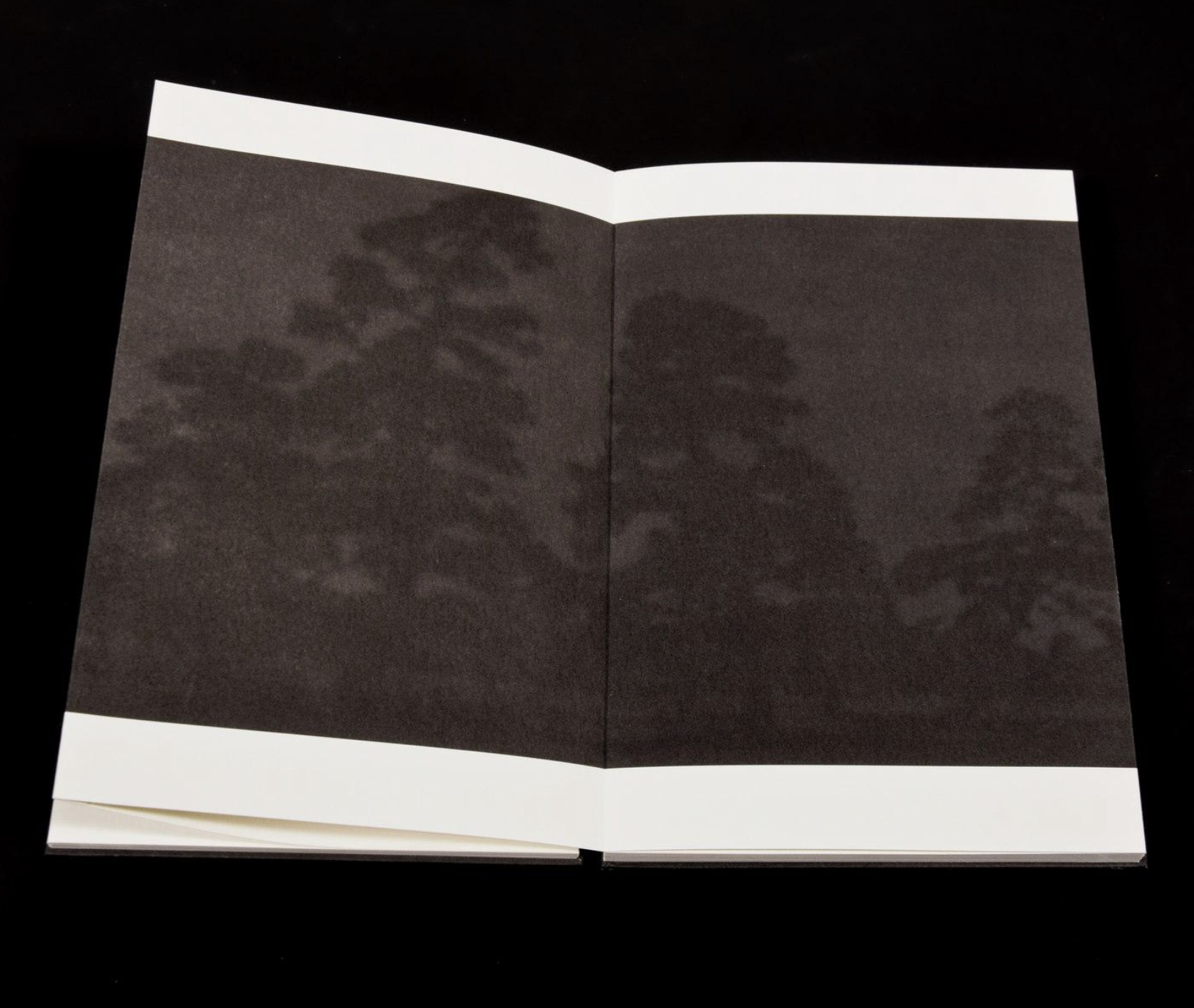
Hiroshi Sugimoto | No Such Thing As Time


Hiroshi Sugimoto 
No Such Thing As Time
Bregenz, Austria: Kunsthaus Bregenz, 2001
56 pp., 10 x 6 1/2", hardcover accordion fold
Edition size unknown


Sunday, June 12, 2016

This Week on Tumblr


This week on tumblr (last, actually): Artists' books from the legendary German publisher Edition Hansjörg Mayer. Born in Stuttgart in 1943, Mayer is a printer, artist, and publisher. Edition Hansjörg Mayer first concentrated on portfolios and series dedicated to concrete poetry, and later on artists' books, most famously the 20-volume series by Dieter Roth. Mayer is now based in London. 


Monday, November 30, 2015

This week on Tumblr: Parkett Editions


Based out of Zurich, Switzerland, Parkett magazine publishes thrice a year and has a circulation of 12,000. Founded in the early '80's, the periodical has ran features on Laurie Anderson, Richard Artschwager, Meret Oppenheim, Matthew Barney, Louise Bourgeois, Francesco Clemente, Dennis Oppenheim, Peter Fischli and David Weiss, Gilbert and George, Rebecca Horn, Ilya Kabakov, Jeff Koons, Brice Marden, Bruce Nauman, Meret Oppenheim, Ann Hamilton, Sigmar Polke, Gerhard Richter, Cindy Sherman, Sherrie Levine, Richard Prince, Richard Serra, Hanne Darboven, Mariko Mori, Robert Mapplethorpe, Brice Marden, John Baldessari, Joseph Beuys, Ed Ruscha, Hiroshi Sugimoto, Nancy Spero, and many others.

Each artist highlighted in the magazine creates a special signed and numbered artwork, exclusive to Parkett.

http://artistsbooksandmultiples.tumblr.com


Saturday, August 11, 2012

Hiroshi Sugimoto | Theatres


Hiroshi Sugimoto
Theatres
Koln, Germany: Verlag De Buchhandlung Walter, 2006
224 pp., 11.5 x 12", hardcover
Edition of 4000
A silver-covered cardboard slipcase houses a hardcover book containing 96 images of cinemas, which the artist documented between 1976 and 1999. Sugimoto photographed inside movie theatres, framing the screen, while films played. He would open his aperture at the start of the movie and closing it at the end, using no other light source.


"Different movies give different brightnesses. If it's an optimistic story, I usually end up with a bright screen; if it's a sad story, it's a dark screen. Occult movie? Very dark."